The best RFID cat feeder for most multi-cat homes in 2026 is a collar-tag scheduled hopper—typically the PETLIBRO One RFID—when cats tolerate a light tag and you need timed dry portions plus theft control. If you want ISO microchip or tag recognition in one unit, step up to a dual-ID hopper such as PawsPik. If your cat refuses collars, skip RFID hoppers and use a microchip sealed bowl (SureFeed) instead: in this category, “RFID” usually means a proprietary collar tag, not an implanted-chip reader.
Alan is the owner of two dogs. Editorial note: We may earn a commission from qualifying Amazon purchases (tag smartpetcomfo-20). Full disclosure at the end. Selective feeders help with meal logistics—not a substitute for veterinary diet or behavior plans.
Best RFID cat feeder — quick picks (2026)
Takeaway: Match ID method to collar tolerance first, then schedule vs wet-food needs.
- Best overall RFID hopper: PETLIBRO RFID Automatic Cat Feeder (One RFID) — app schedules, proprietary collar tag, dry kibble only.
- Best dual-ID (chip or tag): PawsPik Automatic Microchip RFID Cat Feeder — ISO 15-digit chip or included PawsPik tag; 16-cup hopper.
- Best collar-averse pivot: SureFeed Microchip Pet Feeder — sealed bowl reads implanted chip (or SureFlap RFID tag); wet/dry access control, not a timed hopper.
What an RFID cat feeder actually does
Takeaway: RFID feeders gate access with a worn tag (and sometimes a chip); they are not magic “stop begging” devices.
In pet retail language, an RFID cat feeder identifies a pet with a radio tag so only the authorized animal can open a lid or keep a bowl unlocked. Two common implementations sit under that umbrella:
- Collar-tag RFID hoppers (PETLIBRO One RFID): a proprietary lightweight tag on the collar unlocks a bowl lid and the unit dispenses dry kibble on a schedule you set in an app.
- Dual-ID hoppers (PawsPik): the feeder pairs to one ISO-compliant 15-digit implanted microchip or one brand RFID tag—useful when one cat is chipped and another is not.
That is different from a classic microchip sealed bowl such as SureFeed, which primarily reads the implanted ISO chip (or an optional collar tag) to open a lid over food you portion by hand. It is also different from a peaceful dual-bowl scheduled feeder, which does not stop a determined food thief. For the full entity map, see our microchip vs RFID cat feeder guide.
RFID vs microchip vs dual bowl — comparison table
Takeaway: Schedule + collar OK → RFID hopper; collar-averse → microchip bowl; peaceful sharing → dual bowl.
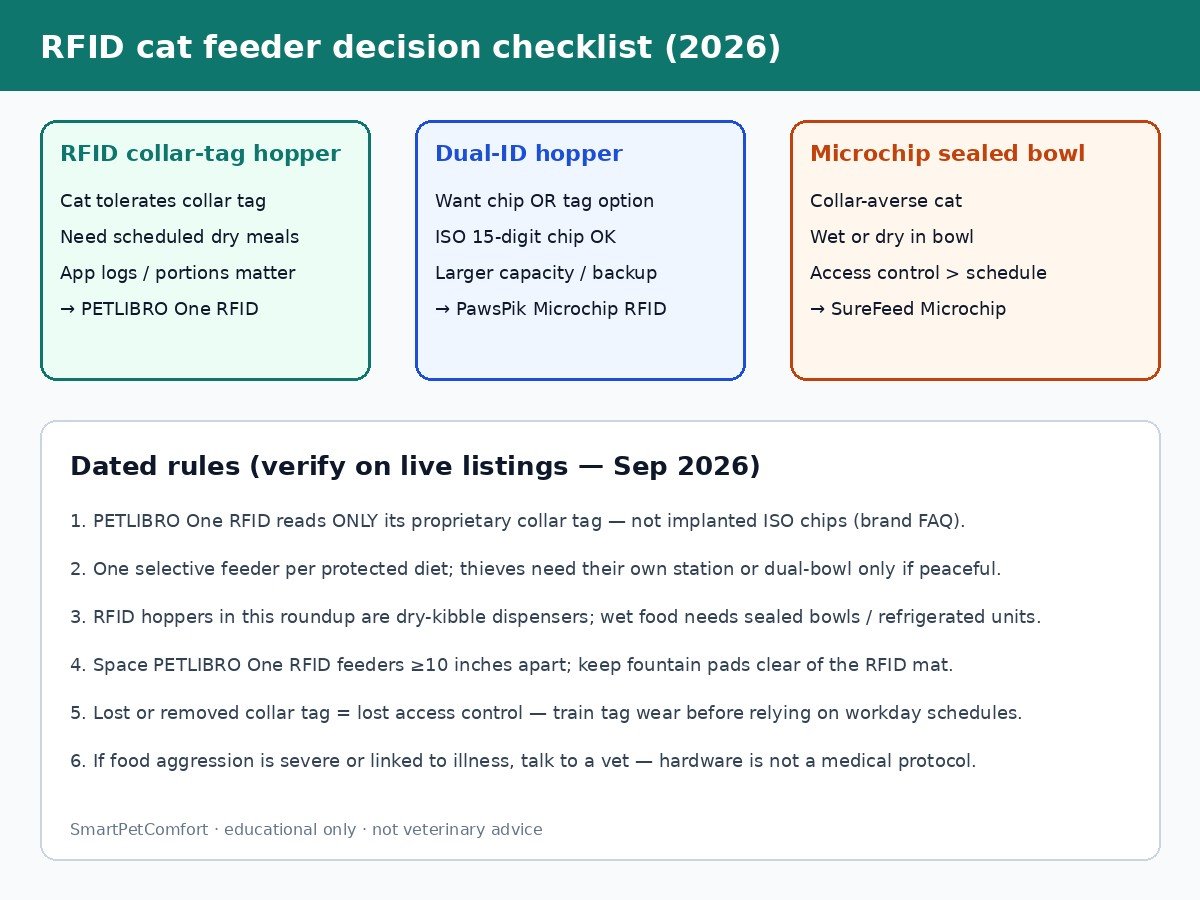
| Model (ASINs verified 2026-09-24) | ID method | Food | Schedule / access | Best household |
|---|---|---|---|---|
| PETLIBRO One RFID (B0CX8VKMD9) | Proprietary collar tag only (not implanted chip) | Dry kibble ~2–15 mm | App meals + RFID lid lock | Collar-tolerant cats; timed dry diets |
| PawsPik Microchip RFID (B0FT7KFT6P) | ISO 15-digit chip or PawsPik tag (one pet per unit) | Dry only (vendor) | App up to 10 meals; Closed/Open modes | Need chip fallback or larger 16-cup bin |
| SureFeed Microchip (B00O0UIPTY) | Implanted chip (+ optional SureFlap RFID tag) | Wet or dry in sealed bowl | Access control; you portion food | Collar-averse; wet/Rx bowls; flies/odor seal |
How to choose an RFID cat feeder (decision checklist)
Takeaway: Answer five questions once—then shortlist only models that pass.
- Will every protected cat wear a collar tag all day? If no → prefer microchip bowl (best microchip cat feeder) over PETLIBRO-style RFID.
- Do you need auto-dispense on a clock? If yes → RFID/dual-ID hopper. If you only need “keep sibling out of this bowl,” a sealed microchip bowl may be enough.
- Wet food or refrigerated wet? Hoppers in this roundup are dry-only. For wet automation see wet-food feeders and refrigerated wet feeders.
- How many protected diets? Plan one selective station per protected diet—not one feeder for the whole house.
- Is the household peaceful enough for dual bowls? If thieves are mild and diets match, a dual hopper can be simpler; if theft is the problem, RFID/microchip first.
Our RFID cat feeder picks on Amazon
Takeaway: Three verifiable ASINs—collar-tag flagship, dual-ID upgrade, collar-averse alternative.
Prices and stock move daily. Confirm the exact SKU, included tags, and “not microchip activated” language on Amazon before you buy.
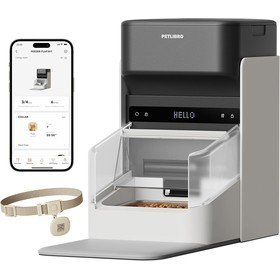
PETLIBRO RFID Automatic Cat Feeder (One RFID)
Best for: Collar-tolerant multi-cat homes that want app schedules + access control on dry food.
~3 L dry hopper, dual-band Wi-Fi app, adjustable lid-speed training modes, and a sealed bowl lid that opens for the paired proprietary tag. Brand FAQ is explicit: it does not read implanted microchips or third-party tags. Plan one unit (and one tag) per protected diet; space units about 10 inches apart per PETLIBRO placement notes.
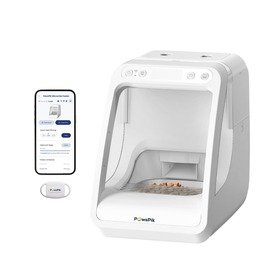
PawsPik Automatic Microchip RFID Cat Feeder
Best for: Homes that want ISO microchip pairing or a brand RFID tag, plus a large 16-cup dry bin.
Each unit pairs to one pet (one chip or one tag). Closed Mode opens only for the paired ID; Open Mode stays open unless an unpaired tagged/chipped pet approaches—useful when training. App scheduling (up to 10 meals) and backup-battery support are the big differentiators vs a sealed bowl. Dry food only per vendor directions; confirm your chip is ISO 15-digit before you rely on chip mode.
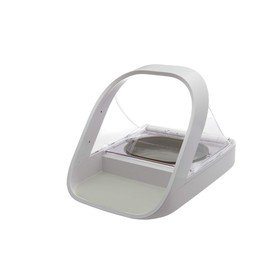
SureFeed Microchip Pet Feeder
Best for: Collar-averse cats and wet-or-dry bowls where access control beats auto-dispense.
Why it appears in an RFID roundup: many shoppers search “RFID feeder” when they really need selective access without a daily collar. SureFeed opens for a registered implanted chip (or SureFlap RFID collar tag) and seals the bowl between visits—excellent for prescription wet food and fly control. It does not replace a scheduled hopper; you still portion meals. Connect/app variants exist if you want monitoring.
Setup and collar-tag training checklist
Takeaway: Prove tag wear and lid comfort at home before you trust a workday schedule.
- Fit the tag: Use the included breakaway-safe collar guidance from the brand; check for rubbing behind the ears after the first day.
- Start slow on lid speed: PETLIBRO offers multiple lid-speed training modes—begin slower so the cat is not startled when the lid moves.
- Pair one pet per protected unit: Do not expect one RFID hopper to serve two different diets.
- Place feeders apart: PETLIBRO notes roughly ≥10 inches between One RFID units; keep fountain RFID mats from overlapping feeder readers.
- Kibble size: Stay inside the maker’s diameter range (PETLIBRO commonly lists ~2–15 mm). Odd shapes jam rotors.
- Power backup: Confirm whether sensing still works on battery backup (some units pause sensing on backup power—read the manual).
- Failure mode drill: Remove the tag once on purpose and confirm the lid stays locked so you know what a lost collar looks like.
Multi-cat math: one feeder per protected diet
Takeaway: Count protected diets, not total cats—then buy that many selective stations.
If Cat A eats renal dry and Cat B steals it, you need at least one selective station for Cat A. Cat B still needs a reliable place to eat—either a second selective unit, a supervised bowl, or a dual-bowl setup only if B is not a thief. Brand manuals and multi-cat forums converge on the same rule: one feeder paired to one ID for each protected ration. Trying to “share” a single RFID hopper across two prescription diets recreates the theft problem the hardware was bought to solve.
For peaceful two-cat homes without diet conflict, start with our best automatic cat feeders for two cats roundup, then escalate to RFID/microchip only if theft appears.
Common RFID feeder pitfalls (and how to avoid them)
Takeaway: Most “RFID failed” stories are collar loss, wrong chip type, or wet food in a dry hopper—not dead sensors.
- Assuming every RFID unit reads implants: PETLIBRO’s own FAQ states the reader works only with the dedicated collar tag. If the listing says “NOT Microchip Activated,” believe it.
- Buying one feeder for three diets: Selective hardware protects one ration at a time. Budget stations equal to the number of diets you must isolate.
- Loading wet food into a kibble rotor: Paste and gravy jam mechanisms and spoil in hoppers designed for dry pieces. Use sealed bowls or refrigerated wet units instead.
- Skipping tag desensitization: Slap a brand-new collar on, leave for work, and return to an empty protected bowl because the cat ditched the tag in the bedroom.
- Ignoring spacing and metal interference: Crowded RFID mats, metal stands, and overlapping fountain pads can create flaky reads—follow brand clearance notes.
- Confusing dual bowls with theft control: Two hoppers help peaceful siblings share a schedule; they do not stop a motivated thief. Escalate to RFID/microchip when diets diverge.
Capacity and refill math (dry hoppers)
Takeaway: Translate liters/cups into days using your cat’s daily dry ration—not marketing “feeds for weeks” claims alone.
PETLIBRO’s ~3 L (~13 cup) One RFID tank is often marketed as roughly two weeks for one cat, but actual days = hopper capacity ÷ daily dry cups. Example: if your vet plan is ½ cup per day, a 13-cup fill is about 26 days before empty—if the cat does not spill, and if you leave headroom so the desiccant and rotor stay happy. PawsPik’s 16-cup bin stretches farther for the same ration. Always leave a visual reserve and replace desiccant on the maker’s interval (PETLIBRO commonly suggests about every two weeks).
Refill discipline matters more than absolute size. A huge bin filled with stale kibble helps nobody. Buy capacity for your travel cadence, then schedule mid-bin freshness checks the same way you check fountain filters.
Dated 2026 shopping rules for this keyword
Takeaway: Re-verify ASINs and “chip vs tag” bullets on Amazon the day you buy—SKU titles drift.
- Primary RFID ASIN used here: B0CX8VKMD9 (PETLIBRO One RFID / PLAF301 family) — in stock on Amazon.com when checked 2026-09-24.
- Dual-ID ASIN: B0FT7KFT6P (PawsPik Automatic Microchip RFID, white 16-cup) — in stock same day; black sibling SKUs may exist.
- Collar-averse ASIN: B00O0UIPTY (SureFeed Microchip Pet Feeder) — long-standing selective bowl; Connect/app kits are separate listings.
- OOS caution: Older PortionPro Rx active-RFID SKUs (e.g. B0D6GVDP4Q) showed unavailable during the same check—do not hard-code OOS cards into a live page.
- Language trap: Search results blend “RFID,” “microchip,” and “collar sensor.” Read the bullets for implanted-chip support before you click Buy.
FAQ: best RFID cat feeder
Does an RFID feeder read my cat’s implanted chip?
Not always. PETLIBRO One RFID reads only its proprietary collar tag. PawsPik can read an ISO 15-digit implanted chip or its own tag. SureFeed is primarily a microchip sealed bowl. Always check the listing for “not microchip activated” language.
What if my cat won’t wear a collar?
Choose a microchip sealed bowl (SureFeed / MiBowl class) instead of a collar-tag hopper. Forcing a collar on a cat that removes tags defeats RFID access control the first time the tag hits the couch.
Can one RFID feeder feed two cats on different diets?
No. These units pair to one authorized ID for the protected ration. Buy one selective station per protected diet.
Can RFID hoppers dispense wet food?
The Amazon RFID hoppers in this guide are dry-kibble dispensers. For wet meals use a sealed microchip bowl you portion by hand, or a purpose-built wet/refrigerated feeder.
PETLIBRO vs PawsPik — which should I buy first?
Start with PETLIBRO if cats already wear collars and you want a widely reviewed app hopper at a mid price. Choose PawsPik if you need ISO chip pairing, a larger 16-cup bin, or Closed/Open access modes—and you accept the higher price tier.
Why include SureFeed in an RFID roundup?
Because SERP shoppers mix “RFID” and “microchip” language. SureFeed is the practical pivot when collar tags are a non-starter, and it supports optional SureFlap RFID tags when a chip is missing or incompatible.
What happens if Wi-Fi drops or power fails?
Most scheduled hoppers keep local meal schedules without cloud, but sensing behavior on backup batteries varies by model—read the manual for your SKU. Keep a few days of measured backup food available during outages.
When should I see a vet instead of buying hardware?
Sudden ravenous eating, vomiting after meals, rapid weight change, or aggression that risks injury are medical/behavior issues. Hardware can protect a prescribed diet; it does not diagnose why theft or polyphagia started.
Final recommendation
Takeaway: Buy the ID method your cats will actually keep on their bodies.
For most collar-tolerant multi-cat homes, the PETLIBRO RFID Automatic Cat Feeder is the clearest 2026 starting point: scheduled dry meals, app logs, and tag-gated lids. Step up to PawsPik when you need chip-or-tag flexibility and capacity. If collars are a hard no, skip hoppers and get a SureFeed Microchip Pet Feeder, then deepen the decision with our microchip vs RFID and RFID vs dual bowl guides.
Affiliate disclosure: SmartPetComfort.com is a participant in the Amazon Services LLC Associates Program. As an Amazon Associate we earn from qualifying purchases when you buy through links tagged smartpetcomfo-20 (rel=”nofollow sponsored”). Prices, stock, and bundle contents change—verify on Amazon. This article is educational product guidance, not veterinary advice.