The best automatic litter box for multiple cats is the one that keeps a clean litter bed after every use, gives every cat reliable access, and has enough waste-drawer volume for your household size—not simply the highest brand score. For many two- to three-cat homes, a trusted sealed unit such as Whisker Litter-Robot 4 works well when cats share calmly; compact app-connected globes like PETKIT PuraMax 2 suit smaller footprints; and open-top designs such as Neakasa M1 Plus help hesitant or large cats. Vendor “up to N cats” claims assume sharing succeeds. If you see guarding, waiting lines, or accidents outside the box, add a second unit or a traditional backup. Sudden elimination changes deserve a veterinarian visit—not a product swap alone.
What “best” means for multiple cats (clean bed, access, capacity)
Shoppers searching for the best automatic litter box for multiple cats usually mix three different jobs into one product page. An automatic (self-cleaning) litter box is a machine that removes clumps after a cat leaves, so the next cat finds a cleaner surface. That improves cleanliness. It does not automatically create more territory. Traditional husbandry guidance from organizations such as AAHA and ASPCA-style summaries often recommends roughly one litter box per cat plus one extra (the N+1 rule) as an access guideline. Treat N+1 as geography and choice—not a claim that robots cannot help. Auto-clean changes how quickly waste sits in the bed; it does not relocate boxes around the home.
Define the hardware before you compare brands. Globe / rotating drum units (Litter-Robot class, many PETKIT sealed models) sift clean litter back into a bed while dumping clumps into a sealed waste drawer. Open-top rake or rotating open bowls (Neakasa / CatLink-class) keep a visible litter surface that some anxious cats prefer. Sealed camera units add app video and usage logs; treat health-tracking marketing as optional insight, not a diagnosis tool. Watch for under-sized entries, litter-type mismatches, and optional camera subscriptions marketed as required for basic cleaning.
Rank “best” by shared access, a reset bed after each use, realistic drawer days for your cat count, then apartment noise, odor, and footprint. 2026 price bands roughly run ~$200 budget open models, ~$350–400 mid sealed units, and ~$500–750 Whisker or camera-premium—verify live Amazon pricing.
How many automatic litter boxes do 2 or 3 cats need?
Two calm adult cats that already shared one traditional box often share one high-capacity automatic unit during the day, especially if you keep a second traditional pan as overnight or backup access. Two cats with a history of guarding, spraying near the box, or bathroom accidents usually need two stations—either two autos or one auto plus one traditional box in a different room. Three cats raise the odds of waiting lines. Vendor claims such as “up to four cats” on Litter-Robot 4 describe mechanical capacity and sensor thresholds, not a guarantee that four cats will peacefully queue. If three cats already needed three traditional pans, expect at least two automatic units or one large auto plus one traditional backup rather than forcing everyone through a single entrance.
Decision shortcuts: buy one premium unit first when the household is two cats, litter preference matches the machine, and you can empty the drawer every few days. Plan for a second unit when you have three-plus cats, a large Maine Coon or senior that blocks the doorway, or when one cat refuses sealed tunnels. Remember that auto-clean improves the bed quality; N+1-style access still matters for cats that want separate rooms. Soft caveat: these are husbandry heuristics, not medical protocols.
Capacity math — waste drawer size and empty cadence
Empty cadence is the multi-cat feature people underestimate. Rough planning math (highly variable by diet, litter absorbency, and clump size): estimate 2–4 significant waste events per cat per day, then compare that volume to the drawer liters. A ~7 L drawer on a compact sealed unit may last closer to a week for one cat and only a few days for three. Larger drawers (about 11–12 L on some open-top and large-capacity designs) stretch the interval but still fill faster with multi-cat urine clumps. Manufacturer “15-day” or “7-day for three cats” figures assume ideal litter and average output—treat them as marketing ceilings, not a travel plan.
| Household | Planning assumption | ~7 L drawer | ~11–12 L drawer |
|---|---|---|---|
| 1 cat | 2–4 cycles/day | ~5–10 days | ~7–14 days |
| 2 cats | 4–8 cycles/day | ~3–6 days | ~5–10 days |
| 3 cats | 6–12 cycles/day | ~2–4 days | ~4–7 days |
In apartments with limited ventilation, prioritize drawer sealing and carbon or odor packs alongside drum size. Pair litter automation with multi-cat feeding and water gear—see automatic feeders for two cats and quiet cat water fountains for apartments.
Entry height, drum size, and large or senior cats
Entry height and interior volume decide whether a “multi-cat” box is usable for the biggest or oldest cat in the home. Low-entry sealed models (PETKIT PuraMax 2 lists roughly a 7.9-inch entry in current Amazon copy) help short-legged and senior cats. Large globes and wide open tops help cats that need room to turn—Litter-Robot 4 is marketed for cats from about 3 lb upward with multi-cat sharing, while Neakasa M1 Plus lists support into the low-thirties of pounds for larger breeds. Always confirm current weight minimums and kitten modes on the listing: many robots pause or lock auto-clean for very small cats.
Measure the cat, not the brochure. If your largest cat already shoulders through a covered traditional box, test whether a tunnel entrance feels tighter. Open-top designs reduce the “cave” feeling for hesitant cats. Sealed designs usually win on odor in small apartments. For seniors with arthritis, add a step or choose a unit that includes one (Litter-Robot bundles often ship a step and fence), and keep a shallow traditional backup during transition week.
Best automatic litter boxes for multiple cats (comparison table + picks)
These three Amazon-verified starting points cover trusted multi-cat sealed cleaning, compact 2–3 cat apartments, and open-top large-capacity sharing. Specs and prices change—confirm weight limits, litter compatibility, and Wi-Fi bands on the product page before you buy. Whisker often sells Litter-Robot direct with trials; Amazon stock fluctuates, so compare both if you want the longest return window.
| Model | Best for | Vendor multi-cat note | Design | Empty / odor notes | Buy path |
|---|---|---|---|---|---|
| Litter-Robot 4 (Whisker) | Trusted shared sealed unit | Up to 4 cats (claim) | Globe + sealed drawer | App waste/litter levels; carbon / OdorTrap options | Amazon + D2C |
| PETKIT PuraMax 2 | Compact 2–3 cat apartments | Multi-cat friendly; ~76 L interior | Sealed globe, low entry | ~7 L waste bin; N50 odor packs | Amazon-heavy |
| Neakasa M1 Plus | Hesitant / large cats, open feel | Up to ~3 cats; large weight range | Open-top auto | ~11 L class waste; pull-and-wrap bags | Amazon |
Our Amazon picks for multi-cat automatic litter boxes
Real US Amazon listings with product photos. Confirm current price, color, and bundle contents on Amazon before you purchase.
Best overall trusted — Litter-Robot 4
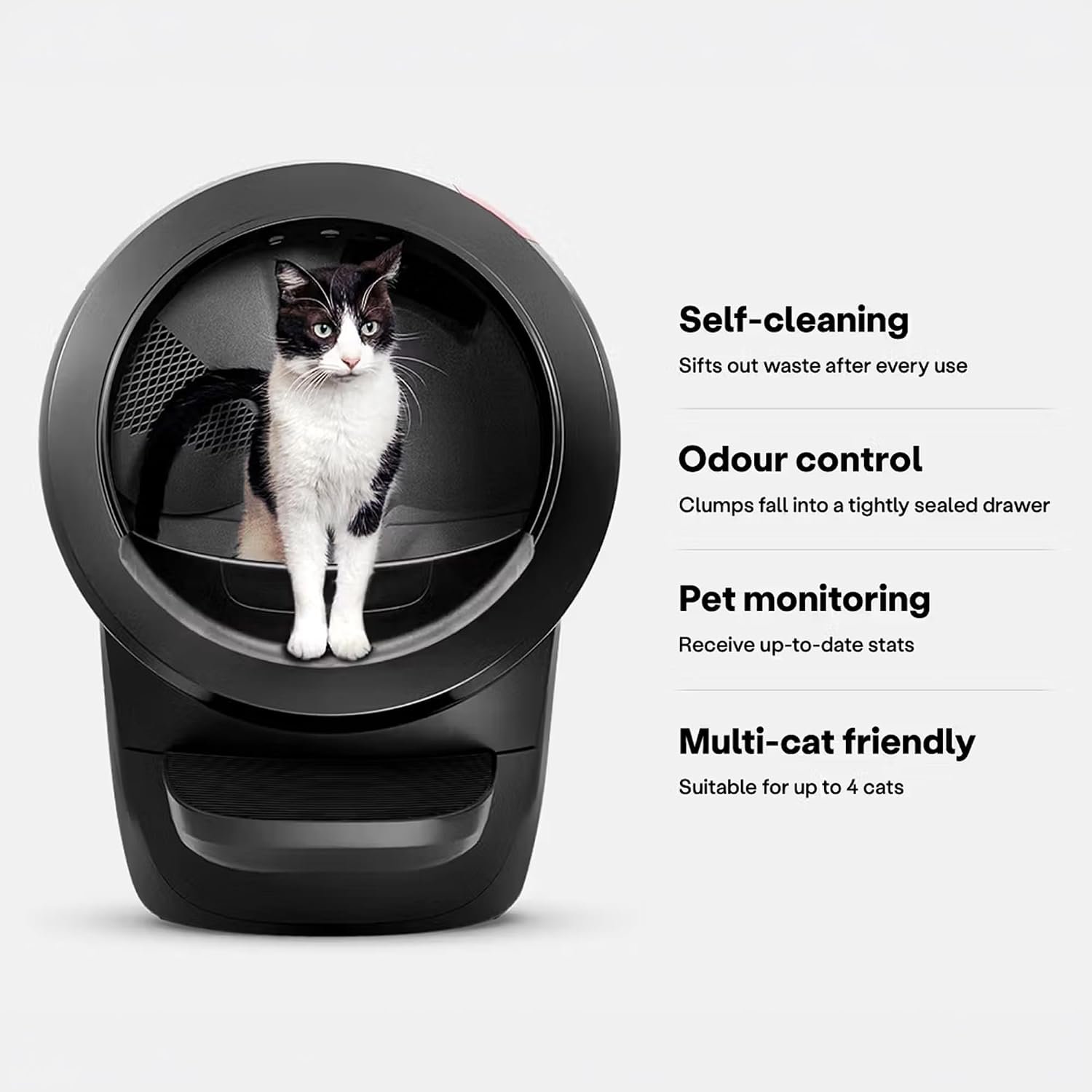
Litter-Robot 4 with Step & Fence (Whisker)
Best for: Multi-cat homes that want a proven sealed globe and app monitoring
Wi-Fi Litter-Robot 4 sifts clumps into a sealed drawer and is marketed for up to four cats (each typically 3+ lb). The step and fence bundle helps seniors and reduces scatter. Empty cadence still shrinks with every extra cat—plan drawer liners and carbon filters. Whisker’s direct site may offer trials; Amazon is convenient when in stock.
Best compact for 2–3 cats — PETKIT PuraMax 2
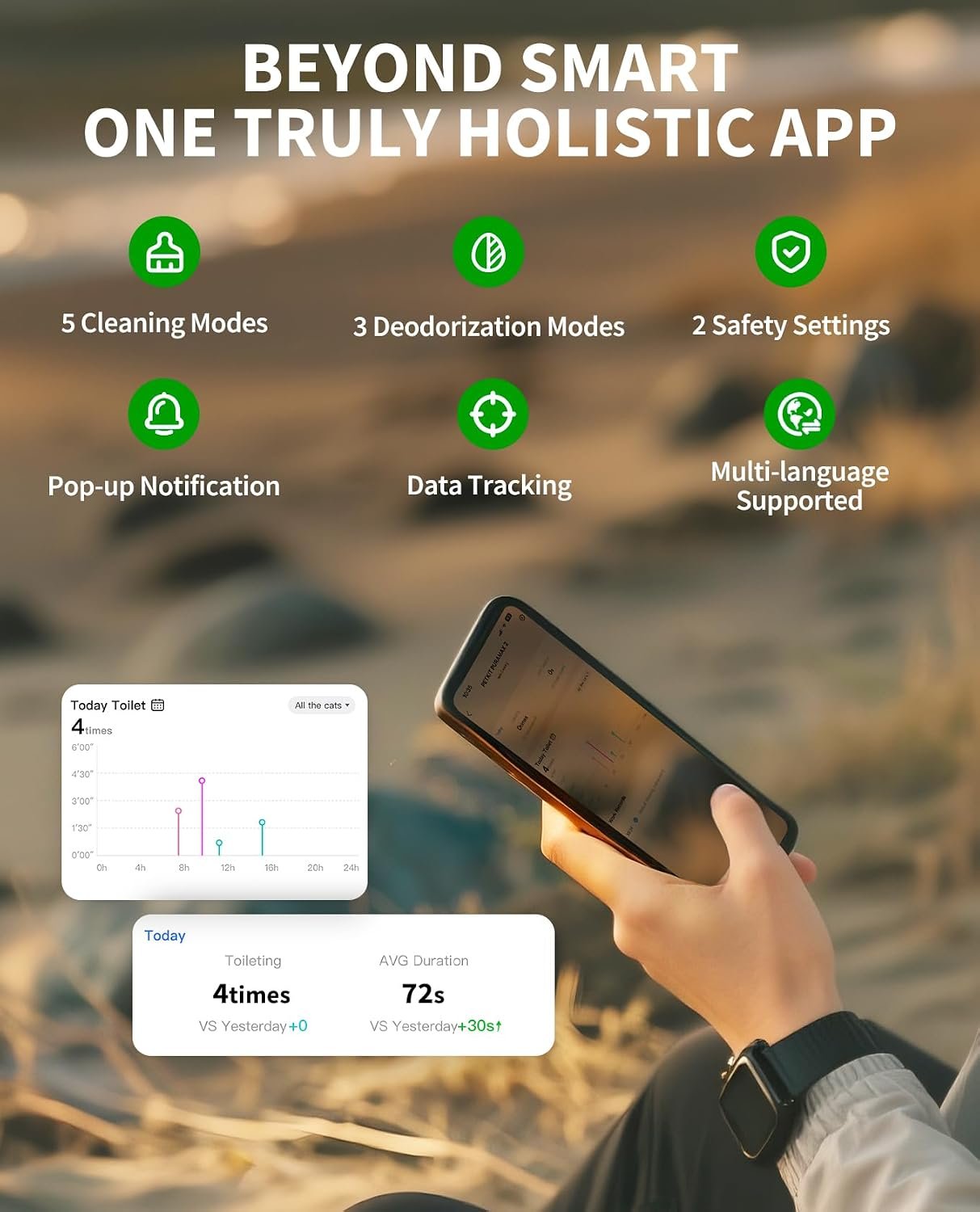
PETKIT PuraMax 2 Automatic Litter Box
Best for: Apartments needing a lower entry and smaller footprint for 2–3 cats
PuraMax 2 pairs a ~76 L drum class interior with a low entry (about 7.9 inches on current listings), app weight tracking, and a sealed ~7 L waste bin. Strong mid-price sealed option when Litter-Robot is over budget or too tall. Compatible with clumping litter; follow PETKIT guidance on pads, bags, and N50 odor eliminators. Not for kittens under the maker’s age/weight minimums.
Best open-top / large-capacity feel — Neakasa M1 Plus
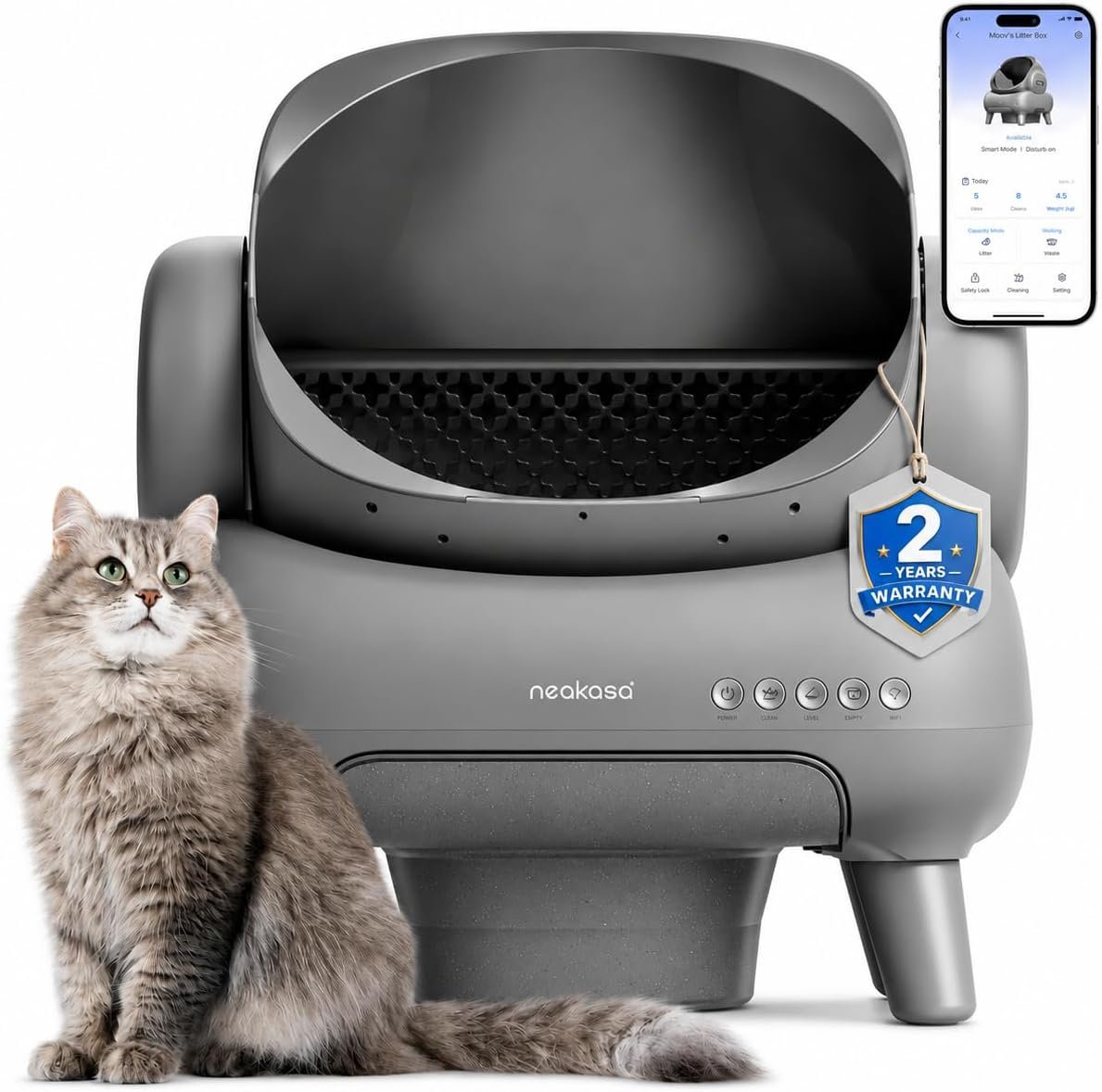
Neakasa M1 Plus Open-Top Self-Cleaning Litter Box
Best for: Hesitant cats, large breeds, or homes that prefer an open litter surface
Open-top automatic cleaning with a large waste bin (about 11 L class) and multi-cat marketing up to roughly three cats. Useful when sealed tunnels slow adoption. Odor control relies more on bag sealing and room ventilation than a fully enclosed globe—pair with a mat and realistic empty schedule. HomerunPET CS106-class ultra-large drums are another D2C large-capacity path; we featured Neakasa here because the US Amazon ASIN was easier to verify live.
Litter-Robot vs PETKIT vs large-capacity open/sealed designs
Litter-Robot 4 wins on brand maturity, parts ecosystem, and a clear multi-cat story, at a premium price and a larger footprint. PETKIT PuraMax 2 (and higher PETKIT camera models such as Purobot Max Pro 2 when you want video) wins on apartment scale and often lower street price, with more consumable SKUs (bags, N50 packs, litter pads) to budget for. Open-top large units win when cats refuse hoods or when you need a visually open bed; they usually trade some odor isolation for easier entry. Ultra-large sealed drums (HomerunPET CS106-class with ~106 L domes and oversized waste bins) target three-plus cats or very large breeds, but US Amazon availability of the base unit can be thin—verify the ASIN is the robot, not just waste bags, before you cart.
Camera and waste-analysis features can flag usage changes but do not replace a veterinarian. For scooping relief alone, skip camera SKUs; for room check-ins, prefer a separate local-storage camera—see pet cameras without a subscription.
Apartment setup — noise, odor, footprint, and backup boxes
Apartments punish bad placement. Put the unit on hard flooring the sensors expect (many manuals warn against thick mats under weight sensors), leave clearance behind the globe so rotation is not blocked, and aim the entrance toward a quiet wall rather than a doorway cats use as a racetrack. Night cycles can wake light sleepers—use night-delay settings when available, or schedule cleans after you are awake. Sealed drawers plus carbon filters or brand odor packs matter more in studio layouts than in houses with a garage litter room.
Keep one traditional backup box during the first one to two weeks, ideally in a second micro-location so a bullied cat has an exit option. Power needs a grounded outlet; measure height for under-counter nooks. Track litter tracking with a generous mat and, for long-haired cats, more frequent globe wipe-downs. Hydration and feeding stations should sit away from litter splash—stainless fountain bowls are easier to scrub when litter dust migrates; compare options in our stainless steel cat water fountains guide. Wet-food automation belongs in the kitchen plan, not beside the litter robot—see automatic feeders for wet food.
Transition checklist for multi-cat households
- Week 0: Place the new unit beside the favorite traditional box with litter from the old box mixed in. Leave auto-clean off or on a gentle/manual mode so the first visits feel static.
- Days 1–3: Reward calm investigation. Do not trap cats inside. If one cat refuses, keep the traditional box available—forcing sealed entries creates accidents elsewhere.
- Days 4–7: Enable automatic clean cycles after you have watched successful exits. Confirm sensors pause when a second cat approaches.
- Days 8–14: Watch for guarding, lined-up waiting, or avoidance. Those signs mean you need more access (second unit or permanent backup), not a different scent spray.
- Ongoing: Empty on your measured cadence, wipe sensors, and restock liners/filters. Log appetite and litter habits separately from gadget dashboards.
If a cat suddenly urinates outside the box, strains, or produces blood-tinged litter clumps, contact a veterinarian promptly. Hardware changes are not a workup for urinary disease or pain.
FAQs
Can two cats share one automatic litter box?
Yes—many two-cat homes share one high-capacity automatic box successfully when both cats already tolerated a shared traditional pan and neither guards the entrance. Keep a backup box for the first weeks. If accidents or blocking appear, add access rather than only buying stronger odor gel.
How many Litter-Robots do I need for three cats?
Start by reading behavior, not the “up to four cats” badge. Three cats that already needed multiple pans usually do better with two Litter-Robots or one Litter-Robot plus another station. One unit can work for calm trios with frequent empties, but it is a capacity bet, not a rule.
How often do you empty an automatic litter box with multiple cats?
Expect emptying every few days with two or three cats on a mid-size drawer, and closer to weekly only with larger drawers and lighter output. Use the first two weeks to learn your real cadence; manufacturer day-counts are optimistic ceilings.
Are automatic litter boxes safe for kittens or senior cats?
Follow each brand’s minimum weight and kitten mode. Many units require cats above roughly 3 lb and several months of age before auto-clean is enabled. Seniors need low entries or steps and non-slip footing. When in doubt, keep a shallow traditional box available.
What litter works in most automatic litter boxes?
Most globe robots want hard-clumping litter within a size range the sieve can separate—often clumping clay; some brands also list tofu or mixed litters. Avoid non-clumping, crystal-only, or huge wood pellets unless the manual explicitly allows them. Wrong litter causes waste to fall back into the bed.
Do I still need a backup traditional litter box?
During transition, yes. Long term, keep at least one alternate access point if you have two or more cats, travel often, or have ever seen box guarding. Auto-clean is not a substitute for a second geographic option.
Is Litter-Robot better than PETKIT for multi-cat homes?
Litter-Robot 4 is the safer “known quantity” for many multi-cat households that can afford it. PETKIT PuraMax 2 is often the better apartment value with a lower entry and smaller silhouette. Choose based on entry height, drawer size, and budget—not forum loyalty alone.
Will an automatic litter box reduce litter box odor with multiple cats?
It usually reduces odor versus unscavenged traditional pans because clumps leave the bed quickly and waste sits in a sealed drawer. Multi-cat volume still smells if you ignore a full bin. Sealed globes generally beat open-tops for odor in studios; ventilation and liners still matter.
Bottom line (who should buy which)
If you want the most established sealed multi-cat automatic litter box and can place a larger footprint, start with Litter-Robot 4. If you need a lower entry and a more compact sealed globe for two or three apartment cats, start with PETKIT PuraMax 2. If cats hesitate at tunnels or you want an open litter surface with a large waste bin, start with Neakasa M1 Plus. Buy a second unit when access fails—waiting lines, guarding, or elimination outside the box—even if the drawer is still empty. Match litter type to the manual, measure empty cadence in week one, and keep veterinary care in the loop for any sudden bathroom changes. The best automatic litter box for multiple cats is the setup your cats will actually share every day, not the longest feature list on a product page.
Alan is the owner of two dogs. Affiliate disclosure: Smart Pet Comfort may earn a commission if you buy through links on this page. That does not change your price. We do not invent medical advice; talk with your veterinarian about elimination changes or other health concerns. See our affiliate disclosure.