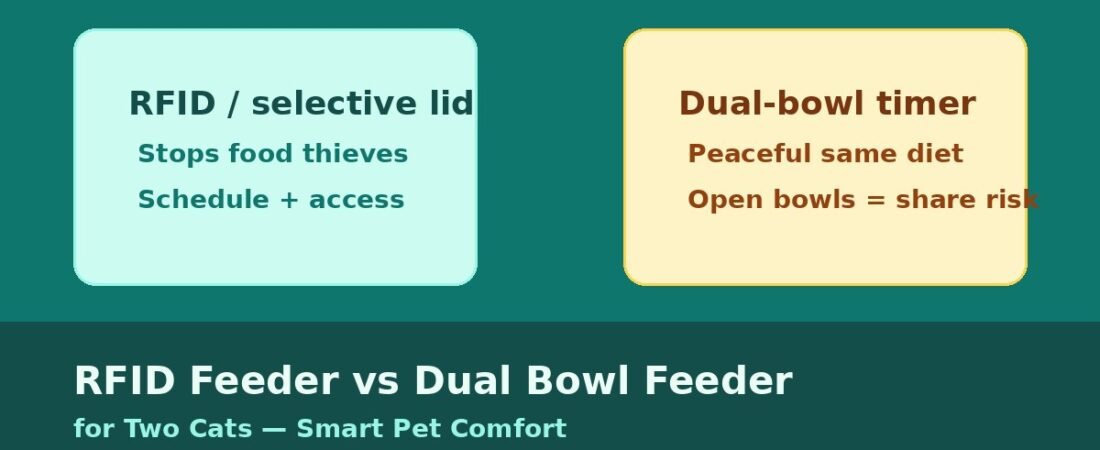
An RFID feeder vs dual bowl feeder for two cats choice is a failure-mode decision. Dual-bowl timed units drop the same dry food into two open dishes on a schedule—handy when both cats eat calmly and share one diet. RFID (and other selective) feeders lock the meal so only a tagged or chipped cat can open the lid—necessary when one cat steals, diets differ, or a veterinarian asked you to keep a formula exclusive. Dual bowls space cats; selective lids lock food. This guide walks that fork, compares three verified Amazon starting points, and links to our deeper two-cat and microchip-vs-RFID posts when you need more detail. Follow food-label or veterinarian portion guidance for calories; sudden appetite or weight changes deserve a vet visit, not a product swap alone.
RFID feeder vs dual bowl feeder for two cats — quick answer
If both cats share the same dry food and finish without raiding each other’s bowl, a dual-bowl automatic feeder (or two separate timed hoppers) is usually enough. If one cat finishes first and moves to the second dish, guards the station, or needs a different formula, skip “bigger dual hopper” marketing and move to selective access: an RFID collar-tag dry hopper such as PETLIBRO’s RFID models, or a microchip-class sealed bowl such as SureFeed when wet food or collar-averse cats are in play. Our overview of feeder types for multi-cat homes lives in best automatic cat feeders for two cats; the definitions of chip vs collar-tag selective gear are in microchip cat feeder vs RFID cat feeder. This page owns the dual-versus-selective fork those posts point toward.
What each architecture actually does
Retail titles blur jobs. A dual-bowl / dual-hopper timed feeder holds dry kibble in one or two hoppers and dispenses into two bowls on a timer. Some models split from a single hopper; others run true independent hoppers. The bowls stay open after the drop unless you add a separate lid product. An RFID feeder in 2026 Amazon language usually means a dry hopper with a proprietary collar-tag reader near the bowl: the lid opens for the enrolled tag, closes when that cat leaves, and an app often schedules portions. A microchip sealed bowl (SureFeed-class) guards wet or dry food you placed in a bowl and typically reads an implanted ID chip and/or a brand RFID tag—strong for diet separation, weaker as a multi-day unattended dry dispenser.
Retail copy often promises “prevent fighting” on dual-bowl listings. Read that as marketing for bowl spacing, not as a lock. Independent dual-hopper models (two food tanks feeding two bowls) still leave both dishes open after a drop; they only help if each cat sticks to its side. Splitter-style dual bowls that share one hopper cannot serve two formulas anyway. When you compare SKUs, ask whether the product changes who can eat or only when food appears.
Selective feeders change the “who.” After the enrolled cat walks away, the lid closes. That is why RFID and microchip designs show up in prescription-diet and multi-cat weight threads: the second cat meets plastic, not leftovers. The tradeoff is setup friction—tags, training modes, batteries, and sometimes app accounts—so peaceful homes should not buy selective gear just because it sounds smarter.
Cameras and treat tossers show you who visited after the fact. They do not lock kibble. If you want visual confirmation while training a selective lid, pair access control with a pet camera without a subscription rather than hoping a dual bowl plus a camera equals fair portions.
Do dual bowl feeders stop food stealing?
Usually no—not against a determined thief. Opposite bowls and a 12–16 inch gap reduce shoulder-bumping and help peaceful pairs eat at the same time. They do not prevent the faster eater from walking to the second bowl after finishing. Forum and buyer threads repeat the same story: the dual unit looked like a fight solution in the product photos, then Cat A vacuumed both sides. Treat dual bowls as a spacing and schedule tool for same-diet homes. When stealing is the problem, you need a lid that refuses the wrong cat.
Aggressive resource guarding, sudden weight loss, or refusal to eat around the other cat can have medical or behavioral causes beyond feeder hardware. A product comparison will not replace a veterinary check when health is uncertain.
Decision tree — peaceful share vs thief vs different diets
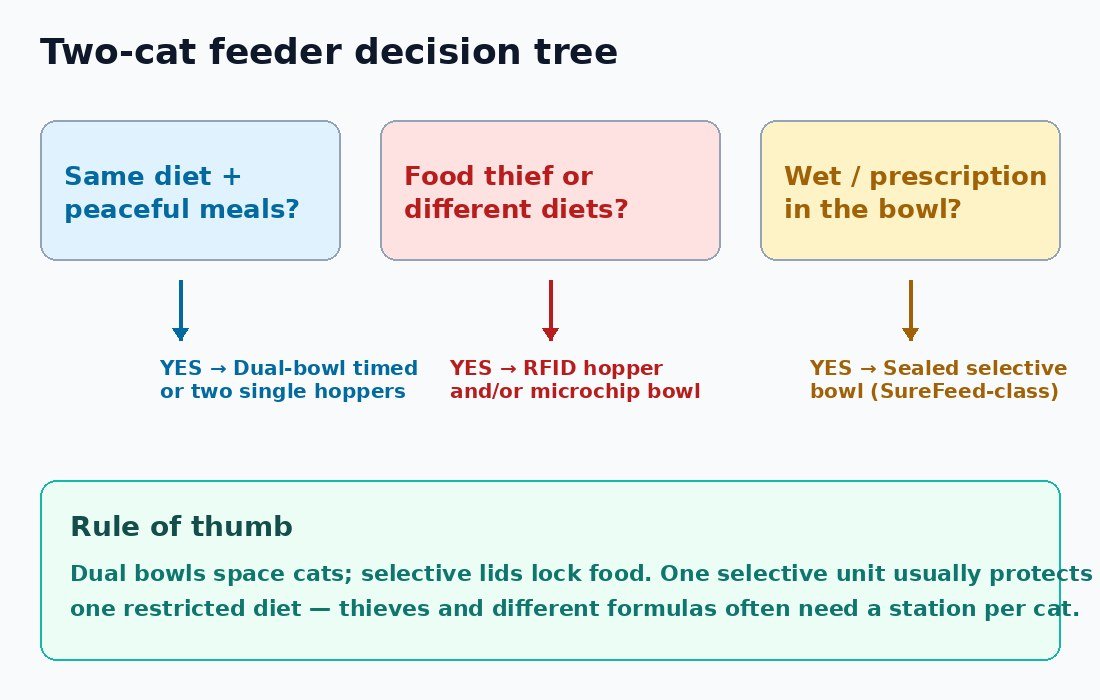
Work the questions in order:
- Same dry diet, peaceful meals? Start with a dual-bowl timed feeder or two single-bowl hoppers placed apart. Watch the first week for bowl-hopping.
- One cat steals or finishes both sides? Move to selective access. An RFID dry hopper fits multi-meal kibble schedules; a microchip sealed bowl fits wet food and collar-averse pets.
- Different diets or a prescription formula? Plan on one selective station dedicated to the restricted food (often one unit per restricted cat). A dual bowl cannot keep formula A out of cat B’s mouth.
- Wet food on a workday schedule? Dual dry hoppers will not chill pâté. Use a wet-capable plan—selective sealed bowl for identity, and/or a chilled tray system from our refrigerated wet food cat feeder and wet-food feeder guides.
- Still unsure after a week of notes? Measure leftovers by bowl. Leftover patterns beat marketing copy.
RFID vs dual bowl vs microchip comparison table
| Factor | Dual-bowl timed feeder | RFID dry hopper | Microchip sealed bowl |
|---|---|---|---|
| Main job | Schedule + two open dishes | Schedule + tag-gated lid | Identity-gated bowl (wet or dry) |
| Stops food thieves? | Weak—bowl-hopping common | Strong for tagged dry meals | Strong for enrolled chip/tag |
| Food type | Dry kibble | Dry kibble | Wet and dry in a bowl |
| Best household | Peaceful pair, same diet | Thief or diet control on dry food | Wet/prescription, collar-averse |
| Watch-outs | Open bowls; same food only | Collar shedding; dry only; spare tags | Usually not a multi-day hopper |
| Typical Amazon pick here | PETLIBRO Granary dual-bowl | PETLIBRO RFID feeder | SureFeed Microchip |
Our Amazon picks for RFID vs dual bowl setups
Real US Amazon listings with product photos already hosted on this site. Specs, bundles, and prices change—confirm hopper size, power backup, bowl material, and whether extra RFID tags are included before you buy.
Best RFID selective dry hopper — PETLIBRO RFID Automatic Cat Feeder
PETLIBRO RFID Automatic Cat Feeder
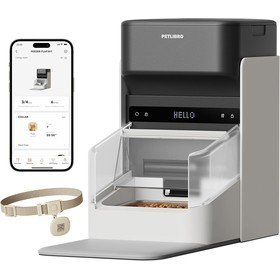
PETLIBRO RFID Automatic Cat Feeder
Best for: Two-cat homes that need scheduled dry meals plus a lid that only the tagged cat can open
Collar-tag RFID access with app-style scheduling for dry kibble. Use this when dual bowls failed because one cat raids the second dish, or when you need portion logs on a thief. Dry food only—pair wet meals with a sealed selective bowl or a chilled wet plan. Keep a spare tag if your cat sheds collars.
Best dual-bowl timed feeder — PETLIBRO Granary dual-bowl (5L)
PETLIBRO Granary Dual-Bowl Automatic Feeder (5L)

PETLIBRO Granary Dual-Bowl Automatic Feeder (5L)
Best for: Peaceful pairs on the same dry diet who mainly need timed portions and two bowls in one footprint
Timed dry-food hopper with dual stainless bowls and a meal splitter layout. Strong when both cats share food and you want to end free-feeding without buying two separate towers. If bowl-hopping starts in week one, treat this as a schedule tool you outgrew—add RFID or microchip access instead of buying a larger open dual unit.
Best selective bowl for wet or diet control — SureFeed Microchip Pet Feeder
SureFeed Microchip Pet Feeder
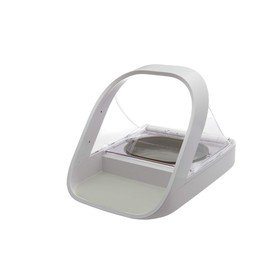
SureFeed Microchip Pet Feeder
Best for: Food stealing or prescription diets when wet food is in the bowl, or when a cat will not wear an RFID collar
Sealed selective bowl that opens for an implanted microchip and/or brand RFID tag. It guards food you place—wet or dry—rather than auto-dumping a multi-day dry hopper. Plan one unit per restricted diet. Training mode and battery care matter; read the manual before a full workday alone.
PETLIBRO RFID vs Granary dual-bowl vs SureFeed
Choose the PETLIBRO RFID feeder when dry kibble is the main diet and you already know open dual bowls failed. You get scheduled portions plus a lid tied to a collar tag. Confirm Wi-Fi band, tag count, and stainless bowl cleaning on the listing.
Choose the Granary dual-bowl when mealtime is calm, both cats eat the same dry food, and you want one footprint with two dishes. Keep expectations honest: spacing helps; locking does not happen.
Choose SureFeed when wet food, a prescription formula, or a collar-hating cat is the constraint. It is the selective path that overlaps the microchip-vs-RFID article’s sealed-bowl lane while this page stays focused on the dual-versus-selective fork.
Setup pitfalls — spacing, collars, wet food, unit count
- Unit count: One selective feeder usually protects one restricted diet. Two cats with two special formulas often need two selective stations (or one selective station plus another feeding method).
- Collar reality: RFID hoppers fail when tags come off under the couch. Use a properly fitted breakaway collar and keep a spare tag enrolled.
- Dual-bowl placement: Give each side enough approach room. Putting a dual unit in a narrow hallway recreates queueing even for peaceful cats.
- Dry-only limits: Most RFID hoppers and dual towers are dry kibble tools. Pâté and gravy need sealed bowls or chilled trays—see the refrigerated and wet-food guides linked above.
- Training week: Selective lids move and click. Use the manufacturer’s gradual training mode so cats do not startle and refuse the station.
- Power and Wi-Fi: Test a full schedule at home before travel. Battery backup helps during short outages; confirm what your model includes.
- Desiccant and kibble size: Dual hoppers and RFID towers jam on oversized or oddly shaped kibble. Check the maximum kibble diameter on the listing and replace desiccant packs on the brand’s schedule so food does not clump against the auger.
- App fatigue: Wi-Fi dual bowls and RFID hoppers add notifications. If you only need a dial timer for a peaceful pair, a simpler non-app dual unit may create fewer failure points than a full smart stack.
- Water and litter still matter: Feeding gear does not replace hydration or scooping capacity. Quiet fountain picks live in quiet cat water fountains for apartments; stainless options in stainless steel cat water fountains; multi-cat litter automation in best automatic litter box for multiple cats.
When two timed single-bowl hoppers beat one dual unit
Two separate single-bowl timed feeders placed in different rooms often outperform one dual-bowl chassis when cats tolerate each other at meals but still prefer distance, or when you want independent portion knobs without a splitter. You pay for two motors and two hoppers; you gain placement flexibility. If stealing is already documented, skip both open designs and go selective. The dual unit wins on counter space and cable count for genuinely peaceful pairs.
A practical hybrid some households use: one dual-bowl or shared timed hopper for the calm eater’s routine dry meals, plus one selective station for the special-diet or stolen-from cat. That hybrid only works if you accept that the open station remains raidable. Document which bowl emptied first for several days; if the dual side keeps getting cleaned out by the wrong cat, retire the open design.
FAQs
Does a dual bowl feeder stop food stealing?
Rarely against a determined thief. Dual bowls help peaceful cats eat at the same time with less shoulder contact. They leave both dishes open after dispensing, so the faster eater can still finish the second side.
When is an RFID feeder better than a dual bowl feeder for two cats?
When one cat steals, when you need logged dry portions for a specific cat, or when diets differ on dry food. RFID lids refuse the wrong tag; dual bowls do not.
Can two cats share one RFID feeder?
One RFID hopper is typically assigned to one cat’s food and tag. If both cats need protected meals, plan on two selective stations—or one selective station plus another feeding method for the second cat.
Do RFID feeders work with wet food?
Most RFID dry hoppers are kibble-only. For wet meals that must stay exclusive, use a microchip-class sealed bowl (SureFeed-style) or a wet tray system paired with supervision or selective access.
Is SureFeed a dual bowl or selective feeder?
Selective. SureFeed guards a single bowl with a motorized lid triggered by an implanted chip and/or brand tag. It is in this guide as the wet/diet selective alternative when dual bowls and dry-only RFID hoppers are the wrong tools.
Do I need two dual-bowl units for three cats?
Probably not as a first move. Three peaceful cats on one diet may do better with multiple single hoppers or a carefully watched dual plus another station. Three cats with stealing or diet splits need selective math (stations per restricted diet), not more open dual trays.
Will a camera feeder replace RFID access control?
No. A camera confirms who ate; it does not block who can open the bowl. Use cameras for troubleshooting alongside selective lids when needed.
What if my cat removes the RFID collar tag?
The feeder will not open for that pet until you replace and re-enroll a tag (or switch to a chip-capable sealed bowl if the cat is implanted and you prefer that architecture). Fit the collar correctly and keep a spare tag.
Bottom line
Shop RFID feeder vs dual bowl feeder for two cats by failure mode. Peaceful same-diet homes: Granary-class dual bowl or two timed single hoppers. Food thieves and different dry diets: PETLIBRO-class RFID hopper with spare tags. Wet food or collar-averse diet control: SureFeed-class microchip bowl. Measure leftovers for a week before you escalate hardware, keep wet automation on a wet-capable plan, and talk with your veterinarian when weight or appetite changes show up alongside mealtime conflict.
Alan is the owner of two dogs. Affiliate disclosure: Smart Pet Comfort may earn a commission if you buy through links on this page. That does not change your price. We do not invent medical advice; talk with your veterinarian about diet changes, weight concerns, or other health issues. See our affiliate disclosure.